


Determining the dependency and vulnerability of the groundwater of Mega Cities (Kinshasa, Johannesburg, Luanda)
SADC-GMI embarked on a project to investigate and provide management strategies for groundwater Dependency and Vulnerability in the Megacities of Luanda, Johannesburg, and Kinshasa in the SADC region. These megacities face significant issues related to groundwater dependency and vulnerability due to their size, rapid urbanization, and environmental factors. To start with, rapid population growth and urban expansion strain water resources, increasing groundwater demand. Moreover, the impacts of climate change include changing precipitation patterns, rising temperatures, and sea-level rise, which affect groundwater recharge rates and quality. Effective groundwater management in many megacities is hindered by inadequate governance, regulatory frameworks, and institutional capacity. While urban pollution from industrial activities, agriculture, and inadequate sanitation facilities poses significant threats to groundwater quality. Therefore, this study aimed to develop an understanding of dependency and Vulnerability in the selected Megacities in the SADC region.
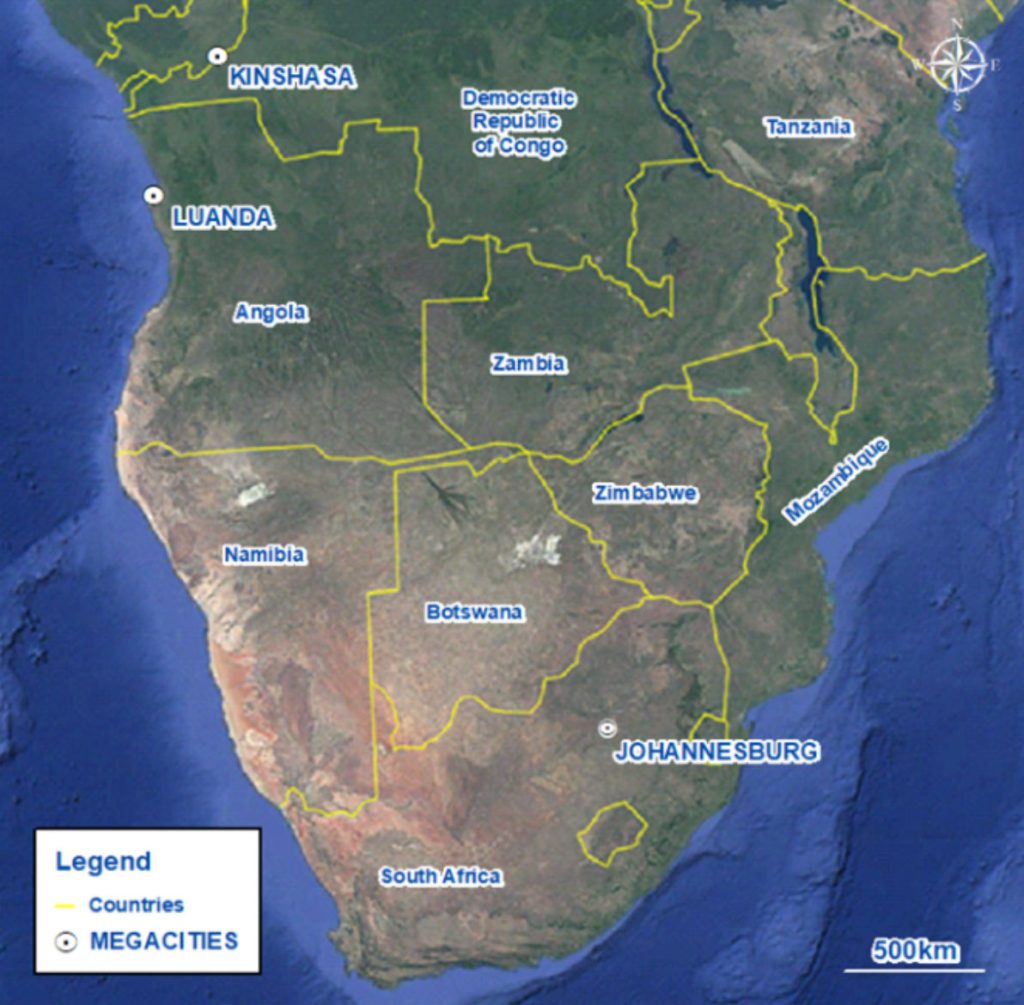
The overall objective was to determine the dependency and vulnerability of groundwater in the Megacities of Johannesburg, Kinshasa, and Luanda. The study included site visits and stakeholder consultations to collect data and identify issues. A comprehensive assessment of groundwater availability, recharge rates, and aquifer characteristics was conducted for each megacity to understand the quantity and quality of available groundwater resources and to assess dependencies and potential risks. The current and projected water demand trends were analyzed, considering population growth, industrial activities, and agricultural needs, as well as potential climate change impacts on future groundwater demand. Vulnerable areas prone to groundwater depletion, contamination, and saltwater intrusion were also mapped to identify high-risk areas and priority interventions to mitigate these vulnerabilities. Following this, strategic action plans for conjunctive management were developed for each of the 3 Megacities. The strategic action plans provide frameworks to guide sustainable groundwater use, promote the conjunctive use of resources in megacities, and support management in mitigating risks and enhancing resilience to climate change and environmental stresses.
The level of dependency varies across the megacities. Luanda faces escalating water security challenges, which are fuelled by rapid urbanization and population growth. The city’s water supply system utilizes surface water from the Bengo and Kwanza Rivers; limited access to piped water, particularly in expanding peri-urban and informal settlements, has led to growing dependence on alternative sources such as groundwater. Even though groundwater is not incorporated in the city’s supply, there are various areas where groundwater is the predominant source for domestic purposes. Groundwater recharge is heavily influenced by land-use changes, where rapid urbanization alters infiltration dynamics, reducing available groundwater for dependent communities
Rapid urbanization and population growth in the megacities of Luanda, Kinshasa, and Johannesburg has placed immense pressure on their groundwater resources. These cities are increasingly vulnerable to contamination due to unregulated urban expansion and poor infrastructure planning. For example, in Johannesburg, the main aquifer is threatened by contamination from acid mine drainage (AMD), old mine dumps, and the release of partially treated sewage wastewater with pollutants migrating from distant sites via connected watercourses. Similarly, in Kinshasa. In Luanda, seawater intrusion poses a significant threat to coastal zone aquifers. Inadequate sanitation infrastructure and uncontrolled urban sprawl have resulted in potential contamination of aquifers in many peri-urban and informal settlements, where pit latrines are common and septic tanks are often constructed near shallow aquifers. Over-abstraction in some aquifers has also introduced saline water in areas such as Talatona. Inland aquifers such as the Quelo aquifer also experience elevated salinity due to low permeability and prolonged groundwater residence times.