


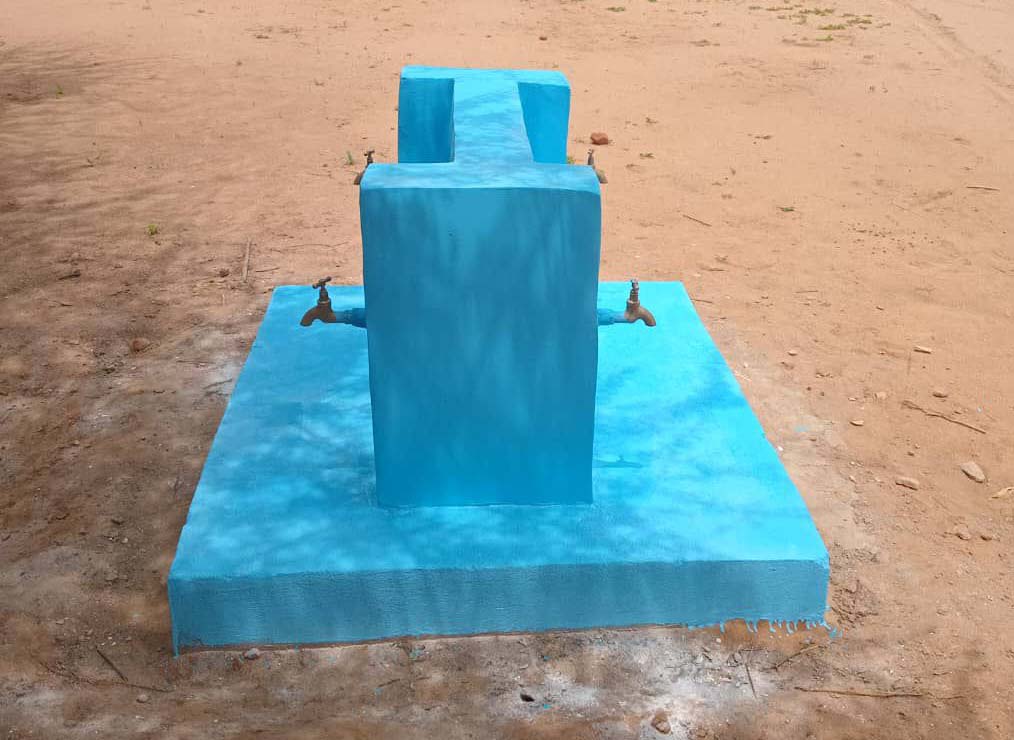
Distance should never be a barrier to clean water. With our new communal water point, the daily journey has been shortened, allowing women and children to focus on what really matters-growth, school, and their future.
Unlocking Water Security: How Groundwater Investigation is Transforming Lives in Tanzania’s Fufu Sub-Catchment
In the semi-arid landscapes of Tanzania’s Rufiji sub-catchment, water has historically dictated the rhythm of daily life. For the residents of seven villages within the Fufu Sub-Catchment, the scarcity of reliable water sources was not just a logistical inconvenience; it was a persistent barrier to health, education, and economic development. However, a transformative initiative spearheaded by the Ministry of Water – Tanzania under the SADC Groundwater Management Institute (SADC-GMI) implemented the Sustainable Groundwater Management in SADC Member States phase 2 project, which turned the tide by proving that the solution to water scarcity often lies beneath our feet (in groundwater resources). This transformative initiative was funded by the Cooperation in International Waters in Africa (CIWA) and the Global Environment Facility (GEF) through the World Bank Group, under the Sustainable Groundwater Management in SADC Member States Program, Phase 2 programme.
Addressing a Critical Need
The project was born out of necessity. As Dodoma City and its surrounding rural communities experienced rapid population growth, the demand for water surged, outstripping the capacity of existing, fragile surface water sources. In a region defined by semi-arid conditions and erratic rainfall, these surface water bodies were prone to drying up, leaving communities vulnerable.
For years, residents in the impacted villages, predominantly women and children, spent grueling hours walking long distances to secure water from seasonal or unsafe sources. This daily burden hindered children’s school attendance and limited the time available for adults to engage in productive economic activities. The lack of detailed groundwater data meant that groundwater resources remained largely untapped and poorly managed.
From Investigation to Innovation
Recognizing the potential of groundwater to provide a climate-resilient solution, the Government of Tanzania, through the Ministry of Water, in collaboration with the SADC Groundwater Management Institute (SADC-GMI), implemented a comprehensive scientific intervention. The approach entailed blending rigorous hydrogeological and geophysical investigations using 26 Vertical Electrical Soundings (VES) and 15 magnetic profiles to map the area’s subsurface potential.
This meticulous research led to the identification of 14 high-potential groundwater sites. To further understand this resource, three boreholes were drilled: one for production and two for dedicated monitoring. The technical success of the drilling was profound, achieving a test yield of up to 40,000 litres per hour (LPH). To ensure long-term environmental balance, a sustainable operational abstraction rate of 10,000 LPH was adopted.
Empowering Communities
The heart of this project lies in the tangible difference it has made in the lives of the 947 direct beneficiaries. By constructing a 2.3 km distribution network powered by an 8 kWh solar energy system, the project brought clean, safe water directly to the doorsteps of families and the classrooms of Nyabu Primary School.
The impact is best described by those whose lives have been changed. A community member from Nyabu village reflected on the shift: “Before this project, we used to walk long distances to find water. Now we have clean water near our homes, and life has become much easier.”
For the 127 children at Nyabu Primary School, the change is transformative. A teacher noted, “Access to water at the school has improved hygiene and allowed students to focus more on their studies.” By removing the daily struggle for water, the project is helping to improve sanitation, elevate public health, and create an environment where education can truly thrive.
Ensuring Long-Term Resilience
Sustainability is the cornerstone of this initiative. Recognizing that infrastructure is only as effective as its management, the project implemented several safeguards:
Solar-Powered Efficiency: By utilizing solar energy, the project significantly reduces operational costs and dependence on fossil fuels, making the system climate-friendly and easier to maintain.
Data-Driven Management: The installation of loggers and a rain station enables continuous monitoring of groundwater levels and quality. This data is vital for informed basin planning to ensure that the aquifer is not over-extracted.
Community Ownership: A crucial element of the project’s success is training water-sector professionals and establishing local operations and maintenance committees. This ensures that the community has the skills and structure to manage the water system locally, fostering a sense of ownership and long-term reliability.
A Model for the Future
The success in the Fufu Sub-Catchment serves as a powerful blueprint for water management in arid regions. By identifying 14 potential groundwater sites and reaching over 9,000 indirect beneficiaries through improved regional planning and infrastructure, the project demonstrates that data-backed, community-focused interventions are key to achieving water security.
As the project continues to serve as a beacon of progress, its success reinforces a simple but profound truth: when we invest in understanding and sustainably managing our groundwater, we are not just pumping water; we are pumping opportunity, health, and a more resilient future for all.